
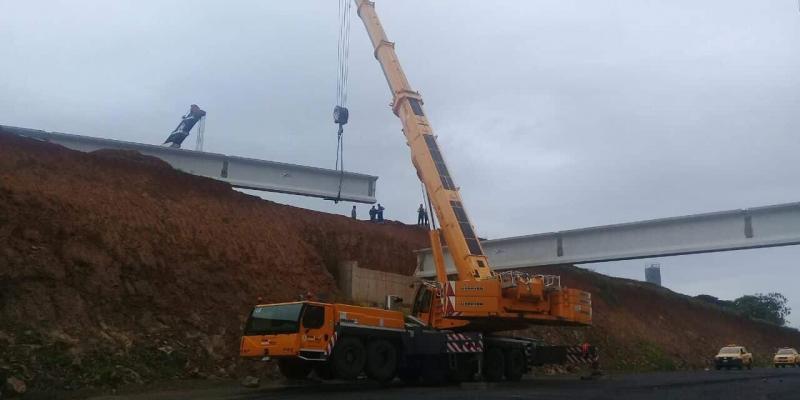
Prestressed concrete beams are the primary choice for bridge construction throughout the country because, compared to other materials and bridge superstructures, they have a longer service life and require less maintenance.
ASSEMBLY OF BEAMS ON BRIDGES
Prestressed concretebeams have been used for years and are becoming increasingly popular due to their aesthetic versatility, strength, quality, and reduced construction time.
After the beams are assembled in place, most bridges use a cast-in-place or precast concrete bridge deck.
In many cases, bridge construction can close busy roads and highways. Minimizing road closure time is a key objective in bridge design and project planning.
The prestressed beams or girders help reduce road closure time by providing materials that are ready to install upon delivery.
In other construction methods, such as in-situ casting, construction is delayed by the additional time required to move the forming equipment and the curing that must take place on site.
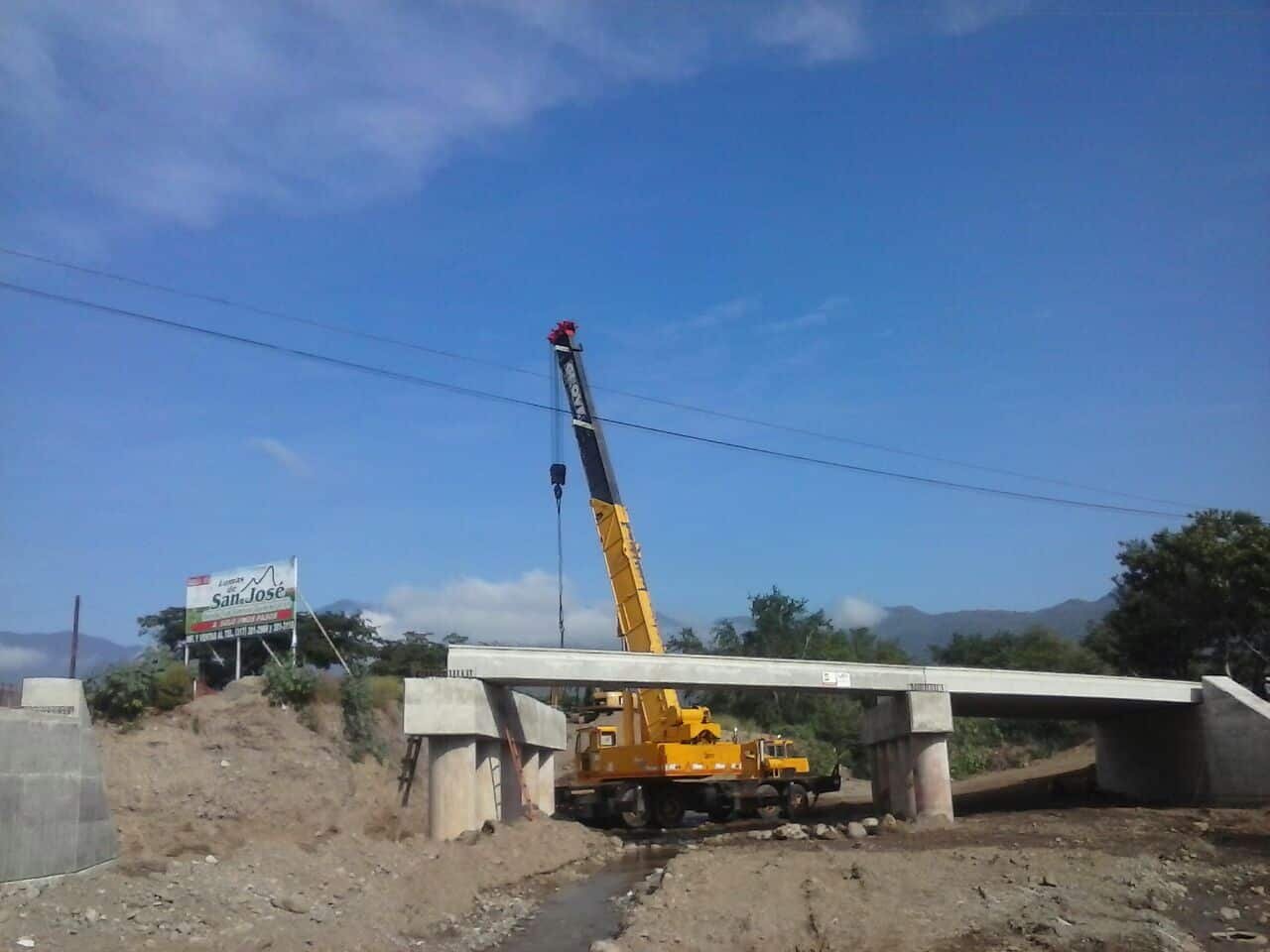
OUR EXPERTS GET IT DONE
Thelifting, transport, and assembly of prefabricated beamscan be quitecomplicateddue tothe weight, size, andshapeof theprefabricated beamin question.
The experienced operators and professional drivers at Grúas y Equipos García are trained to transport these enormous concrete beams to the work site safely.
Using special platforms, our trailers delivery trailers canmake turns that would otherwise be impossible. The beams are transported at very low speeds, so they are accompanied byescort vehicles.
BRIDGE CONSTRUCTION METHODS
Bridge construction is a complex task that requires knowledge and experience. Certain variables, including engineering constraints, costs, and environmental impacts, are involved in deciding which construction method to use and what type of bridge to build.
Bridge construction generally involves methods that use relatively discrete elements, such as beams and girders, which are assembled piece by piece.
However, construction methods have evolved to reduce traffic impact, facilitate construction in congested areas, shorten overall construction schedules, and improve the long-term service life of structures.
Segmental construction
Segmental construction is one of the most important developments in construction in the last century and is a proven method for delivering durable structures that are cost-effective and visually appealing.
This construction method is used worldwide and its versatility can be applied to most structures, including roads, railways, and even movable bridges.
Segmental construction should be considered when one or more of the following conditions exist :
- The bridge is long and/or high, and there is a possibility of repetitive construction details.
- Access to the construction site is very limited and/or traffic disruptions are unacceptable.
- Aesthetics play an important role in the project.
Segmental construction can reduce construction time, limit environmental impacts, minimize traffic disruption, improve seismic performance, and reduce maintenance costs.
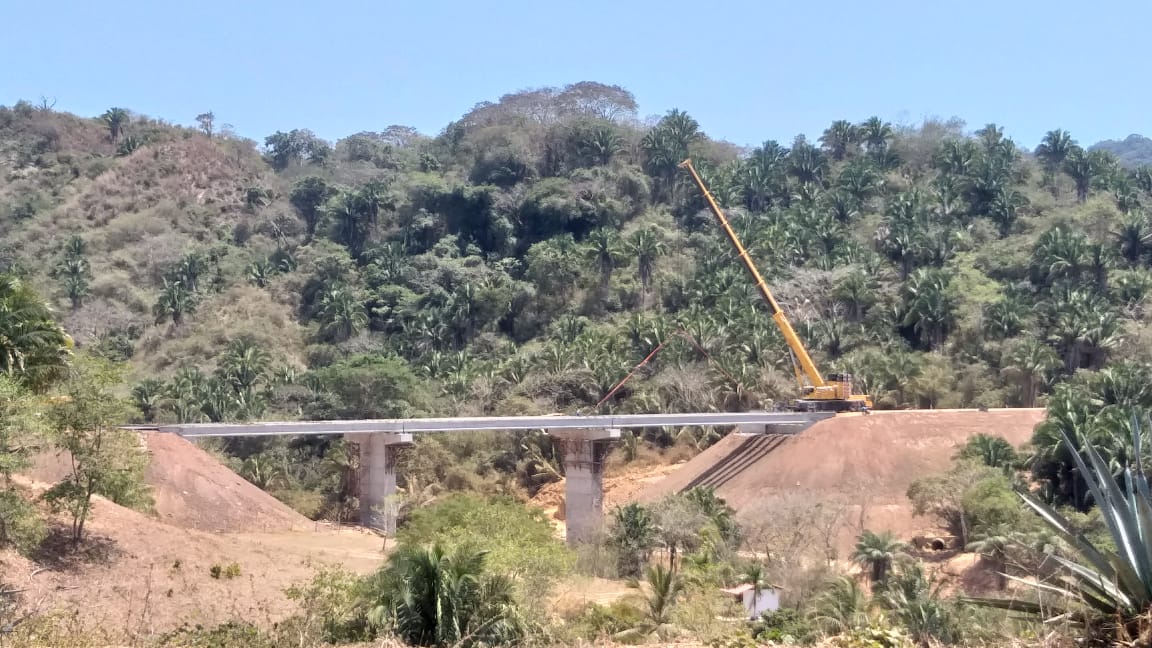
Prefabricated vs. built on site
Segmented prefabricated construction can be implemented in two ways: through the use of prefabricated elements or through on-site construction.
The advantages offered by prefabricated elements are mainly related to manufacturing, which takes place in a plant that produces more consistent, high-quality products and where segments can be manufactured in parallel with the initial construction activities on site, thus improving scheduling.
The main challenges involved in building with precast beamslie in the logistics and installation process between the casting yard and the construction site.
On the other hand, cast-in-place construction requires that a substructure be completed before the superstructure can be built.
On-site beam constructionis used when prefabricated segments are too heavy to ship or access to the site is too restrictive, which can occur as spans become longer or bridges become wider.
For projects in urban areas that require minimal lane closures, detours, and traffic disruptions, construction time is a key factor.
Precast concrete segments are often optimal, as they can be constructed and stored until needed for assembly, reducing the time large equipment and construction activities are on site , thereby increasing the pace of construction.
The choice between prefabricated or on-site construction depends mainly on the size of the project, the construction schedule, the weight of the segments, and access to the site.
High-rise construction
When scaffolding and other temporary supports are difficult to install, this method saves all the temporary work and allows bridges to be built at great heights.
The high-rise construction methodis used when there are few spans ranging from 50 to 250 meters. Bridges using this method can be made of prefabricated or cast-in-place beams .
Once the pillars are constructed, they are used as an assembly platform for prefabricated segments or to support a formwork carriage for segments cast on site.
This method is easily adaptable to long, irregular stretches, congested project sites, rough and aquatic terrain, railroad crossings, and environmentally sensitive areas.
The cantilever or height method is the preferred method for constructing cable-stayed bridges. Once the segments are installed, they are supported by new cable stays at each stage of assembly.
Since no auxiliary supports are required, it is an economical and practical solution for long cable-stayed bridges.
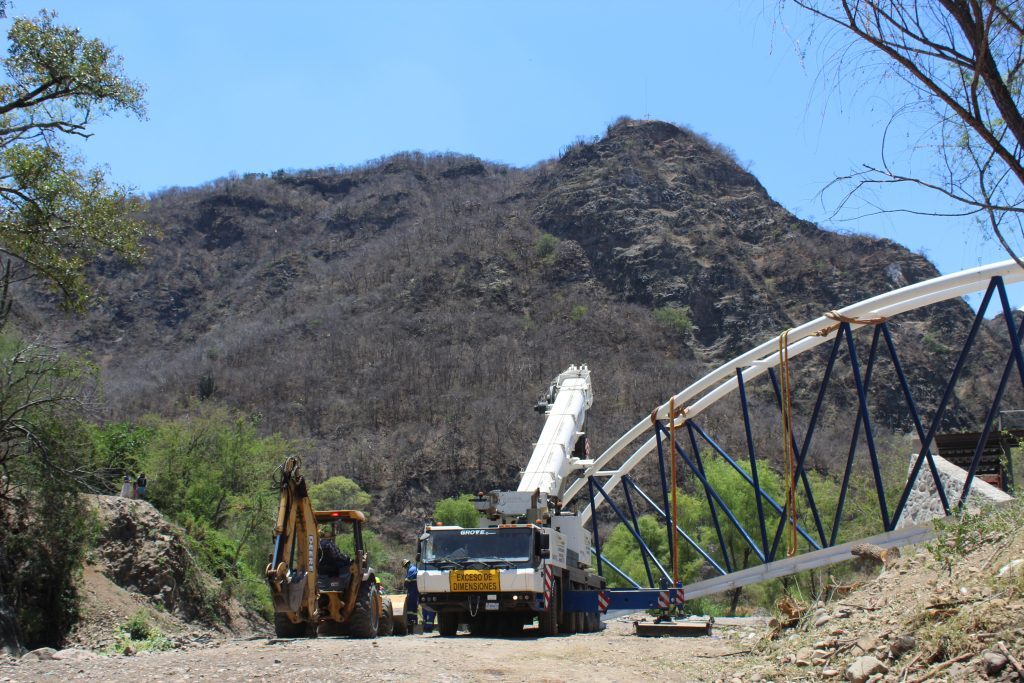
Incremental release method
The incremental launching method (ILM) involves casting 15-30 meter long sections of the bridge superstructure in a fixed formwork behind an abutment and pushing a complete section forward using jacks or a friction launching system along the bridge axis.
MLI can also be applied to tied arch spans and truss structures, if fully assembled prior to launching, as well as to the construction of small and medium-sized cable-stayed bridges.
Although MLI will never be classified as the most cost-effective method for building a bridge, it offers other significant advantages when used in the right circumstances, such as crossing inaccessible obstacles or those protected by the environment.
The significant advantages of the incremental launching method (MLI) include minimal disruption to the environment, no need for formwork, a reduced area for superstructure assembly , and greater safety for workers, as the assembly work is carried out from the ground.
Accelerated bridge construction
The accelerated bridge construction method (ABCM) involves constructing bridge components off-site and then transporting them to the work site for installation. This allows for faster project completion.
This makes it ideal for congested road networks, as it uses innovative planning, design, materials, and construction methods to reduce traffic delays, closures, and construction time.
Although MCAP often requires more capital than other construction methods, its use becomes much more viable when considering the reduced impact on local businesses and the community at large.
At Grúas y Equipos García , we haveexperience in a wide variety of construction methods. Whether building an overpass for greater traffic efficiency, a pedestrian bridge, or a large bridge that shortens road journeys, we understand the importance of working closely with local road and infrastructure engineering companies, agencies, and contractors.
For a bridge that is 10 meters wide and 50 meters long, how many prefabricated girders are needed? It is for a vehicular bridge project in the auxiliary council of Trinidad Sanctorum Cuautlancingo.
Hello, Mr. Sánchez, good morning.
In order to advise you more efficiently, we would appreciate it if you could contact our technicians through our customer service number at 01 800 221 16 84 and from Guadalajara 33 3646 2186, or if you prefer, you can send us an email with your contact details to [email protected] and an advisor will contact you shortly.
We look forward to hearing from you.
Best regards.