
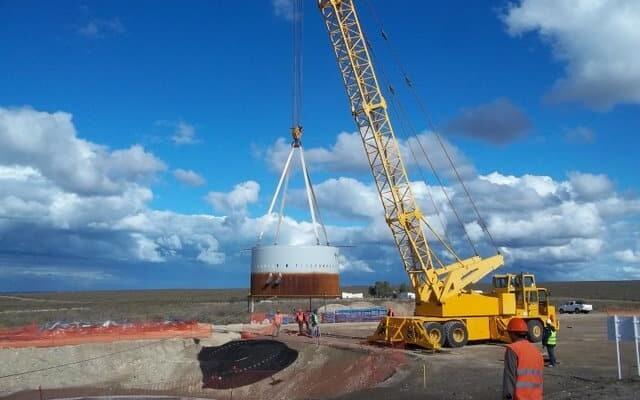
Lifting, also known as hoisting, is a fundamental practice in various industries, from construction to manufacturing. In this article, we will explore everything you need to know about lifting, including equipment and tools, rules and regulations, as well as safety tips and a free PDF lifting checklist.
WHAT IS LIFTING?
Lifting is the process of raising and moving loads using specialized equipment such as cranes, hoists, slings, and rigging. This practice is essential in industrial and construction operations, where heavy loads are handled on a regular basis.
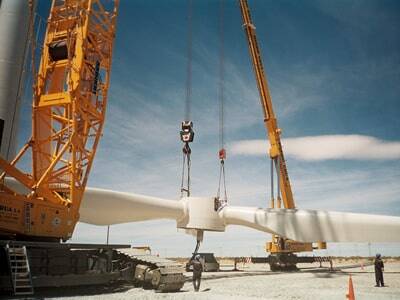
LIFTING EQUIPMENT AND TOOLS
- Cranes: Cranes are one of the most common pieces of equipment used for lifting heavy loads. There are different types of cranes, such as tower cranes, mobile cranes, and telescopic cranes, each designed for specific applications.
- Hoists: Hoists are mechanical devices used to lift and lower loads in a controlled manner. They come in a variety of configurations, including manual, electric, and pneumatic, and are ideal for applications where precision lifting is required.
- Slings and Lifting Equipment: Slings and lifting equipment are fastening systems used to secure and lift loads safely. They are made of strong materials, such as steel or nylon, and come in a variety of configurations, including chain slings, steel cables, and polyester straps.
RULES AND REGULATIONS
In Mexico, there are specific rules and regulations related to lifting loads, designed to ensure worker safety and prevent accidents in the workplace.
It is important that both employers and employees are familiar with these regulations in order to comply with legal requirements and promote a safe working environment.
-
- Safety Standards: Mexico's Ministry of Labor and Social Welfare (STPS) establishes specific safety standards for lifting loads, including requirements for equipment inspection and maintenance, operator training, and safe lifting procedures. Compliance with these standards is essential to prevent accidents and injuries in the workplace.
- Legal Requirements: In addition to safety regulations, there are legal requirements that must be met when performing lifting operations in Mexico. This may include obtaining specific permits and authorizations, as well as conducting risk assessments before beginning lifting work. It is important for employers to ensure compliance with all relevant legal requirements to avoid penalties and fines.
PRECAUTIONS WHEN LIFTING LOADS
- Ensure that the crane is on a firm, stable, and level surface.
- Fully extend the outriggers and mark the accessible areas within the crane's operating radius.
- Never operate the crane within 3 meters of power lines and light poles. It is extremely dangerous.
- All cables, slings, and accessories must be inspected before use.
- Perform regular inspections of cranes and all their components.
- Under no circumstances should the indicated load capacity be exceeded.
- The load must be lifted vertically.
- Pay attention to the signals your coworkers give you.
- Slings should preferably be stored indoors.
- Do not allow cranes to be operated if they do not have sufficient training.
IMPORTANT DEFINITIONS FOR SAFER LIFTING
- Working Load Limit (WLL) – Safe Working Load (SWL): This is the maximum load allowed, applied straight on the center line of the product.
- Proven Load: This isthe average force to which the product is subjected before any deformation is observed.
- Dynamic Load: This isthe force resulting from the sudden application of a force such as impacts or jerks. This load produces a considerable increase in the static load.
DOWNLOAD CHECKLIST FOR LIFTING LOADS
Afterverifyingthat the crane is capable ofperforming the lift,thepre-lift checklistis carried out to assess the work area, the lifting equipment, and the certification of the personnel and crane to be used, in order to ensure work safety.
DOWNLOAD THE LOAD LIFTING CHECKLIST HERE
Remember that, above all,liftingshould always be carried out by professionals.Grúas y Equipos Garcíahas years of experience inlifting,so we are at your service when you need competent personnel for this type ofcrane lifting.
LIFTING SERVICE THROUGHOUT THE REPUBLIC CONTACT US!
CRANE RENTAL IN GUADALAJARA
CRANE RENTAL IN QUERÉTARO
CRANE RENTAL IN PUEBLA
CRANE RENTAL IN MONTERREY
#industrialcrane rental #lifting
What is the PAT/ATB system? In lifting equipment.
The ATB (Anti Two Block) system is an anti-blocking warning system used to warn or prevent the crane operator from blocking the crane twice. Double blocking is a dangerous condition in which the hook block is raised until it makes contact with the tip of the boom. Without a proper ATB system on the crane, this type of blocking could cause costly damage to the crane boom, personnel, and everything around it.
The PAT system in industrial cranes is a load moment indicator (now replaced by "LMI" in newer crane models) designed to provide the crane operator with the essential information required to operate the machine within its design parameters (boom length and angle, radius, rated load, and calculated total weight lifted by the crane).
These two systems are undoubtedly the most basic aids for operators that every industrial crane should have.
Good afternoon, I have a question. I understand that a sheet metal forming machine can be hoisted to construct a roof truss. How high can it be raised without causing oscillation?
before, during, and after lifting a load with the medium and individual source
Thank you for sharing the information.
Thank you very much, Pablo. It helps us to know that you found the information useful.
Hello. I would like to know what the regulations are in Mexico for lifting loads. On the internet, there is a NOM-023-STPS-1993, but at the same time, there is a NOM-023-STPS-2012 that talks about mines. And as far as I know, there cannot be two standards with the same nomenclature that deal with different topics. I don't know if the first one was repealed in order to introduce the second one. And if so, are there no regulations for lifting loads?
Hello Beatríz, thank you for your comment.
It is correct that there cannot be two standards with the same nomenclature that deal with different topics. In this case, the confusion seems to arise from the existence of two standards with the nomenclature NOM-023-STPS but corresponding to different years and topics.
The NOM-023-STPS-1993 standard specifically dealt with safety conditions in load handling and lifting processes. The NOM-023-STPS-2012 standard is a current standard that deals with safety and health in underground and open-pit mines.
Given that regulations on load lifting are governed by several regulations and not specifically by a single current official standard, certain standards are being repealed in order to update and consolidate regulations under new guidelines. In the case of NOM-023-STPS-1993, it may have been repealed to make way for other standards that cover workplace safety practices in a more general or specific manner.
Current Regulations for Lifting Loads in Mexico
1. NOM-006-STPS-2014: This standard regulates the handling and storage of materials, safety conditions, and occupational health. It includes sections that specifically address the lifting of loads, establishing preventive measures and safe procedures for the operation of lifting equipment.
2. NOM-004-STPS-1999: This standard establishes safety conditions for the prevention of risks in the handling and storage of materials. Although it does not deal exclusively with load lifting, it includes requirements applicable to safety in the handling of loads.
3. NOM-009-STPS-2011: Work at height. Although it focuses on work at height, it includes provisions on lifting equipment and procedures, as lifting equipment is often used for work at different heights.
It is common for standards to be repealed and updated to adapt to new technologies, safety methodologies, and international best practices. In this regard, it is likely that NOM-023-STPS-1993 has been repealed to allow for the enactment of new, more up-to-date, and specialized regulations.
In summary and in response to your initial question, for lifting loads in Mexico, it is advisable to refer primarily to standards NOM-006-STPS-2014, NOM-004-STPS-1999, and NOM-009-STPS-2011. Although these standards are not exclusively dedicated to load lifting, they contain provisions and requirements relevant to the safe handling of materials and lifting equipment. It is crucial to consult the updated regulations and apply the specific provisions for each type of work activity.
I hope I've been able to help you, Beatriz. We remain at your disposal.