
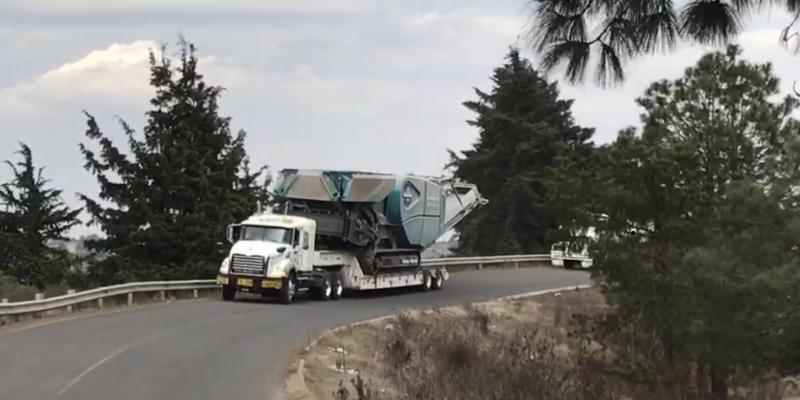
Transporting heavy machinery in Mexico can be quite a complicated task. There are many things that come into play, from the quality of the roads and preparing the equipment to hiring people to help load and unload the machinery.
And that is just a small example of what actually happens in reality. When you delve deeper into the subject, you can find many unpredictable elements that come into play in this process.
Fortunately, there are options. You can find many heavy machinery transport companies in Mexico with the right tools and vehicles for successful transport.
Even so, it's always best to know everything about the process, in case any surprises arise. Let's take a closer look at what it really means to move heavy machinery from one place to another.
TIPS FOR TRANSPORTING HEAVY MACHINERY
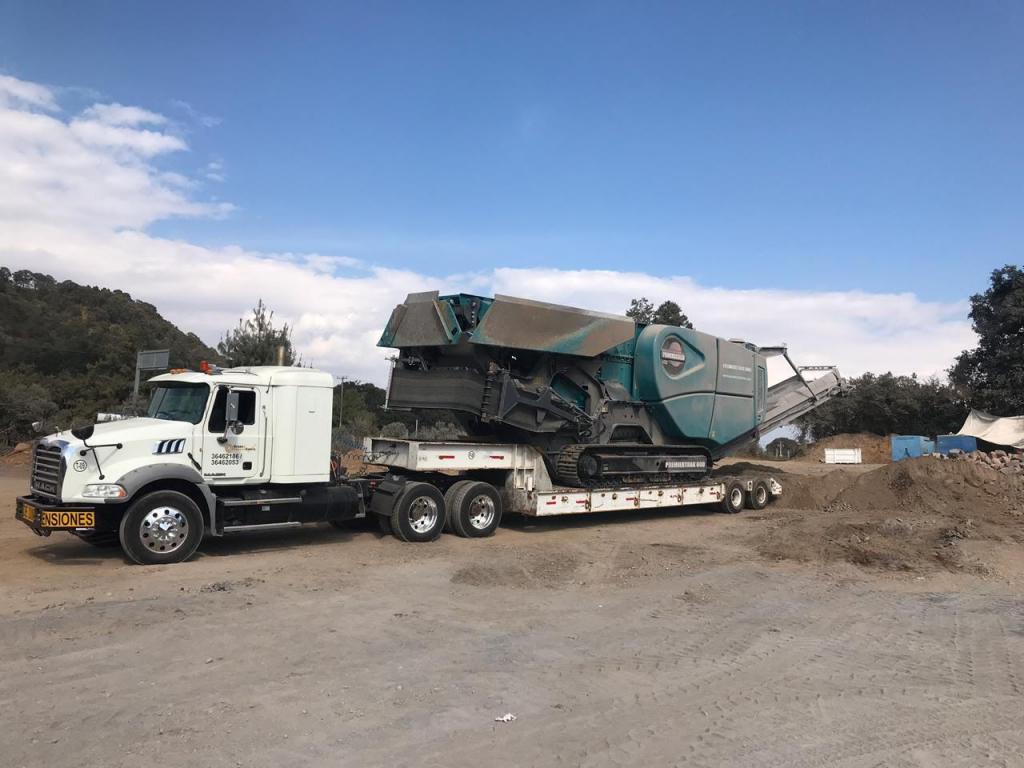
Even if you hire a professional to handle the transport, there are still some recommendations that should be made beforehand to prepare the equipment for transport:
CONSULT THE MANUFACTURER'S MANUAL
Most heavy equipment comes with an instruction manual on how it should be transported, so you should follow their instructions. Manufacturers know which piece of equipment is most delicate and will need extra protection, or if it should be removed to ensure safe transport.
If you no longer have the manual, don't worry: most manufacturers have it on their website. Even if the transport team is very experienced, they may not be familiar with the care required for a specific part of a particular machine or model.
CHECK THE ROUTE
You will surely want the equipment to arrive at its destination on a specific date and time, so it is advisable to check the transport route to see if there is or will be any reason that could cause a detour or hinder the transfer, so that you can make the necessary adjustments to ensure that the equipment arrives at its destination on time.
Consider also, for example, that heavy machinery loaded onto a trailer may be too tall to travel on certain roads, pass through tunnels, or even pass under power lines, so you will have to change your route to continue transport.
Arrange for pick-up and drop-off
Heavy machinery transport companies have equipment that can load and unload the machinery, but it is best for you to be present at these times or to designate a member of your team to be there.
It's always good to have someone keeping an eye on things and making sure that everything you need to transport is secured and ready to go. Check the route with the driver, as well as the estimated time of arrival at the pick-up time.
Avoid designating WIDE cargo
A wide or oversized load can be a problem, especially for extremely large equipment. In Mexico, there are specific regulations regarding the maximum weight or height allowed for safe driving, so it is important to check what these are (even from state to state) and make sure you do not exceed them.
If this is the case, here is what you can do to resolve the issue:
- Overweight and height: remove certain pieces of equipment and ship them separately.
- Excess length: this is not usually a problem, as Mexico allows a lot of leeway in this regard. However, if it is a more complex system, it may be too dangerous to move it intact, so dismantling it may be the only option.
- Very wide machinery: This is indeed a problem. It means that the body of the equipment is too wide for safe transport, although these cases are quite rare.
The most common problem you may encounter here is with weight and height, but these are issues that can be resolved. The other two are less common, even with larger teams.
transportation of heavy equipment during winter
Transporting anything in spring or fall is a piece of cake compared to what happens in the summer or winter months in some cities across the country, where hurricanes or snow can make things even more complicated.
There are some additional precautions you should take at this point to protect your equipment during the move, a step that is quite important to take:
One of the main things you will need to do is drain any liquids from the machinery to prevent slipping or splashing. Driving in winter can be much more hazardous than in normal circumstances, so there is a greater chance of slipping.
Also keep in mind that if temperatures drop too low, fluids can freeze, and the equipment cannot be turned on during transport to warm up. And if the trip takes several hours, it can even be very dangerous and cause serious damage to the machinery.
Next, you will need to protect the equipment from the elements. Larger pieces of equipment also come in unusual shapes, and an open-air transport vehicle may be the only viable option.
If that is the case, your equipment is completely exposed to snow, cold, rain, wind, and other elements. You need to cover it with special materials designed to prevent the outdoor environment from affecting your machinery.
Above all, care must be taken with electronic components that may be affected by low temperatures or water. Damagecan be prevented by taking just a few extra minutes to cover your equipment.
At Grúas y Equipos García , we believe there are two important things people should consider when looking for a heavy machinery transport company: insurance and experience.
In the case of insurance, it is very important that you make sure that the company you hire has insurance and documentation in order so that they can provide you with a guarantee in the event of an accident or problem.
You should pay close attention to the terms of the insurance policy, particularly how much liability the company will assume if something goes wrong.
Remember that accidents can always happen , and your equipment is obviously expensive, so it's important to know how much you will be reimbursed in the event of an unfortunate mishap.
Then there is the question of experience. While it is fine to give newcomers or start-ups a chance, it is best to hire a team with extensive knowledge and experience in transporting heavy equipment.
It will be more reassuring for you, because these companies have trained staff who know everything there is to know about the job, and there is a greater chance of getting things done with fewer obstacles along the way.
HOW TO REDUCE COSTS IN HEAVY CARGO TRANSPORTATION
When done correctly , load planning can help you compete on price. It can help reduce your mileage, improve your delivery capacity, and (ultimately) lower your overhead costs and increase your profit margins. Read on for more information.
LOAD PLANNING
Load planning in specialized transport is the process of organizing cargo to maximize the capacity of each trailer and driver, so that multiple shipments can be delivered with the fewest number of vehicles.
The goal of load planning is to reduce the number of vehicles on the road (and thus transportation costs) while improving operational efficiency.
But it's not as simple as squeezing as many boxes as possible into a container. You have to consider the vehicle's specifications (refrigeration, for example), the center of gravity, the destinations, the type of product, and much more.
TIPS FOR MAKING THE MOST PROFIT
A key challenge for retailers is managing logistics. Managing customer expectations while maintaining profits involves the intricate balancing act of delivery loads, logistics resources, costs, and travel times. Here are the steps to optimize your transport loads:
1 – ELIMINATE EMPTY MILES
The number of empty kilometers can be an indicator of efficiency in retail logistics. Fewer empty kilometers are undoubtedly a sign of efficient logistics.
Therefore, proper optimization of truck loads to reduce empty miles is a crucial capability in retail logistics. Over time, the cumulative inefficiencies of empty miles rob retailers of fuel, time, money, and labor.
"Underutilized" kilometers also represent a lost profit opportunity. To take advantage of this opportunity, these kilometers must be completed, resulting in lower fuel costs and better logistics performance.
Understanding the scale of your operations and, more importantly, having visibility and agility across your entire supply chain is crucial to creating optimized and feasible logistics plans.
2- FIND THE CHALLENGES AND IDENTIFY YOUR LIMITATIONS
In addition to reducing empty miles, the retailer should also optimize its service levels and planned shipment amounts for store deliveries and supplier pickups.
Planning processes can be limited by various factors, such as the number of rules and strict commercial requirements, different types of trucks, delivery times for specific recipients, etc.
In addition, your current planning system may also lack agility in handling sudden disruptions, such as bad weather, traffic congestion, truck breakdowns, etc.
3- CHOOSE PROFESSIONALS IN PLANNING
Seeking professional help to plan your heavy freight transport will help you take advantage of opportunities to consolidate routes and improve your KPI for empty kilometers.
By working with transportation and logistics professionals, the retailer now enjoys significant savingsthanks to reduced empty miles and optimized planning for all its shipments and drivers.
4- SEEK SUPPORT FROM OTHER HEAVY CARGO TRANSPORT COMPANIES
Grúas y Equipos García has extensive experience in the heavy cargo transport sector . We help other transport professionals and companies optimize their planning by entrusting us with their heavy cargo shipments.
By leveraging our team's dynamic planning, retailers can offer greater efficiency and lower costs, ultimately strengthening their leadership position in the market.
Reducing empty miles in retail logistics not only increases profits, but also improves overall operational efficiency and productivity, enabling companies to achieve more without increasing capital costs.
In summary
When it comes to transporting heavy equipment in Mexico, it is best to hire a team of experts to help you, as in the end, it is even the most cost-effective method, rather than doing it yourself or using a less experienced company.
#heavy machinery #transportation #heavy equipment #industrial crane rental